
How to Get Court Records
For Circuit and District court records, the Dallas County Circuit Clerk is the official source. That office holds felony, misdemeanor, major civil, district civil, domestic-relations, child-support, and juvenile files. Small-claims and state or county traffic files sit there too. Access rules still govern each record. Probate and city matters sit with their separate clerks. Before you contact anyone, decide what you need. Is it a docket index, one filed document, a certified copy, or a transcript?
- Locate the full case number, court level, case style, approximate year, and exact event or document title. A Dallas County case search can identify the entry before pages are ordered.
- Use paid Just One Look or subscription AlaCourt for online case details and authorized images, or call the clerk first to confirm custody and availability.
- Inspect an open file at the clerk counter, send a precise request by mail, or phone the proper division for price and procedure. No Dallas records email, fax, or drop-box method was located.
- Ask for a quote before sending payment. State whether plain copies, certified copies, or both are required.
- For a transcript, contact the assigned court reporter with the proceeding date and judge, then ask for the estimate, deposit, and delivery terms.
Visit the clerk counter at 105 Lauderdale Street in Selma. You can also mail your request to P.O. Box 1148, Selma, AL 36702-1148. Public hours run 8:00 a.m. to noon. They resume at 1:00 to 4:30 p.m., Monday through Friday. Wednesdays are different: the counter is closed to the public. Call 334-874-2523 with questions.
Three Dallas Court Record Layers
Many requests go sideways because three layers get blurred. The first layer is the docket itself, a chronological index of case events. Behind each entry sits the filed image. That image is the actual pleading, return, motion, order, judgment, or attachment. A certified copy is the third layer. It is a reproduction the Dallas County Circuit Clerk attests for official use.
| Record layer | What it does | Where to get it |
|---|---|---|
| Docket or case details | Shows what was filed, set, ordered, or decided and when. | AlaCourt, Just One Look, or the clerk file. |
| Filed document or image | Shows the actual text of an authorized pleading, order, or judgment. | Paid portal image or a clerk copy. |
| Certified copy | Adds the clerk's formal attestation to the reproduction. | Dallas County Circuit Clerk. |
A browser printout is not certification. And when the exact ruling matters, an event title on the docket cannot substitute for the signed order behind it.
Types of Court Records
Dallas County court records span many case stages and courts. What you can get depends on the custodian. It also depends on the rule governing the file, and on whether the item was actually filed in the court record.
- Docket sheets or case details listing parties, events, settings, and disposition.
- Complaints, petitions, answers, service returns, motions, briefs, and court orders.
- Judgments, sentencing records, financial entries, and appeal notices where public.
- Domestic-relations records, including a separately documented certified divorce-decree request.
- Probate estates, guardianships, and conservatorships held by Probate Court rather than the Circuit Clerk.
- Transcripts made by a court reporter and exhibits whose custody or access may require court review.
Keep limits in mind. Juvenile files, sealed matters, adoption content, and protected identifiers do not become public just because a related docket exists.
Dallas Record Inspection Under Rule 30
Open files stay available for inspection at no charge under the Alabama Rule of Judicial Administration 30. That applies while they remain under clerk control. That right has limits. It does not override a seal, an exemption, a privacy rule, or a confidentiality statute. Nor does it promise free photocopies or free electronic portal access.
For Dallas County court records work, the official Rules of Judicial Administration index posts the full current rule collection. It comes from the Alabama judicial system.
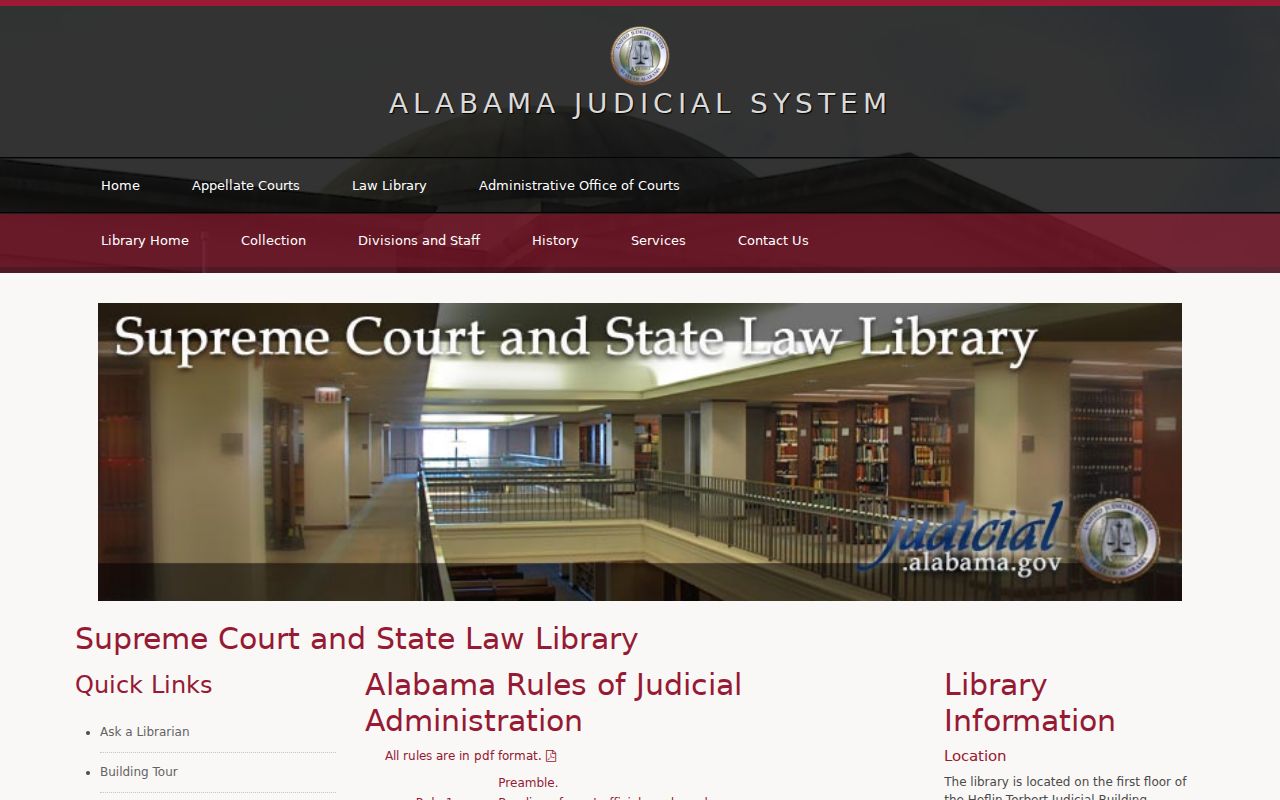
Check the index rather than a summary. Alabama keeps publishing amended and consolidated rules. Stale text should never replace the live rule. Rule 33 separately governs AOC electronic court data and images. That split explains something practical. Paid AlaCourt access can coexist with free inspection of an open clerk-controlled file.
What a Court Record Contains
A full Dallas County court record may hold far more than the public event list shows. Read the file in sequence. Match each motion to its later order. Not every item appears in every case, and some fields or documents may be withheld.
| Case Number | The complete UJS identifier, court or division, case type, and related or appellate number when one exists. |
|---|---|
| Case Header | Filing date, status, assigned judge, case style, parties, and public counsel information. |
| Pleadings | Complaints, petitions, answers, motions, returns, and other documents accepted by the clerk. |
| Orders and Judgments | Signed rulings, dispositions, sentences, and civil judgments that control over a short docket label. |
| Docket Sheet | The chronological index of filings, settings, continuances, orders, and outcomes. |
| Financial Record | Costs, fines, assessments, judgments, or balances where public and applicable. |
| Exhibits and Transcripts | Items that may have separate custody, limits, estimates, or court-order requirements. |
When requesting copies, give the full case number plus the exact document title and event date.
Dallas Certified Divorce Decree
Dallas County publishes one especially clear certified-record route. A certified divorce decree costs $10. Mail the request to the Domestic Relations Division, P.O. Box 1148, Selma, AL 36702-1148, with a money order and a self-addressed stamped envelope. State the document you want, the case number if known, names or case style, approximate decree date, number of copies, your name, and a return address. The official Dallas domestic-relations page posts those decree instructions.
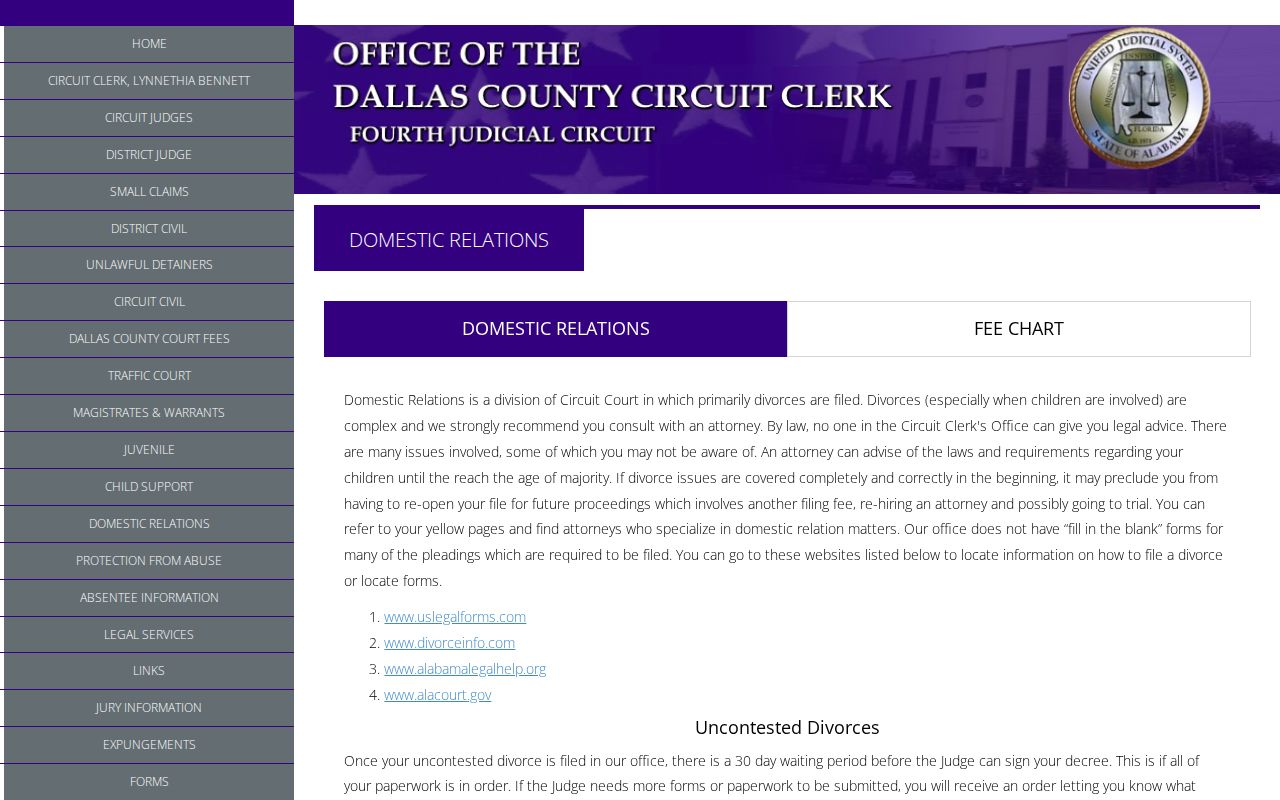
This route is narrower than a universal record form. Do not assume it covers every Dallas County court record. At the counter, the published payment for a decree request is cash or money order. No turnaround time or identification requirement is stated. Confirm both before you travel or mail anything, especially when timing matters.
Certified Copies and Fees
Copy costs in Dallas County depend on the product and its source. The general copy figures trace to an older official Dallas fee-distribution chart. Treat them as a starting point. They are not a guaranteed invoice. Ask the clerk for a current quote and a completion estimate before you mail any funds.
| Item | Published amount | Qualification |
|---|---|---|
| Plain court-record copy | $0.25 per page through 20 pages | Older official chart; confirm current total. |
| Plain copy after 20 pages | $0.50 per additional page | Confirm page count and current quote. |
| General certification | $5 | Confirm whether charged per document or request. |
| Certified divorce decree | $10 | Verified Dallas mail or counter process. |
| Archived search | Not published | Ask before sending payment. |
Dallas County Circuit Clerk
105 Lauderdale Street
Selma, Alabama 36701
Mail: P.O. Box 1148, Selma, AL 36702-1148
334-874-2523
Just One Look charges sit apart from clerk copy fees. A $9.99 query or a paid image does not include Dallas County clerk certification.
AlaFile and Dallas Court Records
AlaFile is Alabama's electronic filing and service system for registered users. It delivers filed material and notices within a user's authorized case workflow. It is not the anonymous public records search. AlaCourt plays that research role as a read-only product. Clerks and judges use AlacourtPlus to process filings. The official AlaFile portal displays the registered-user filing entry.
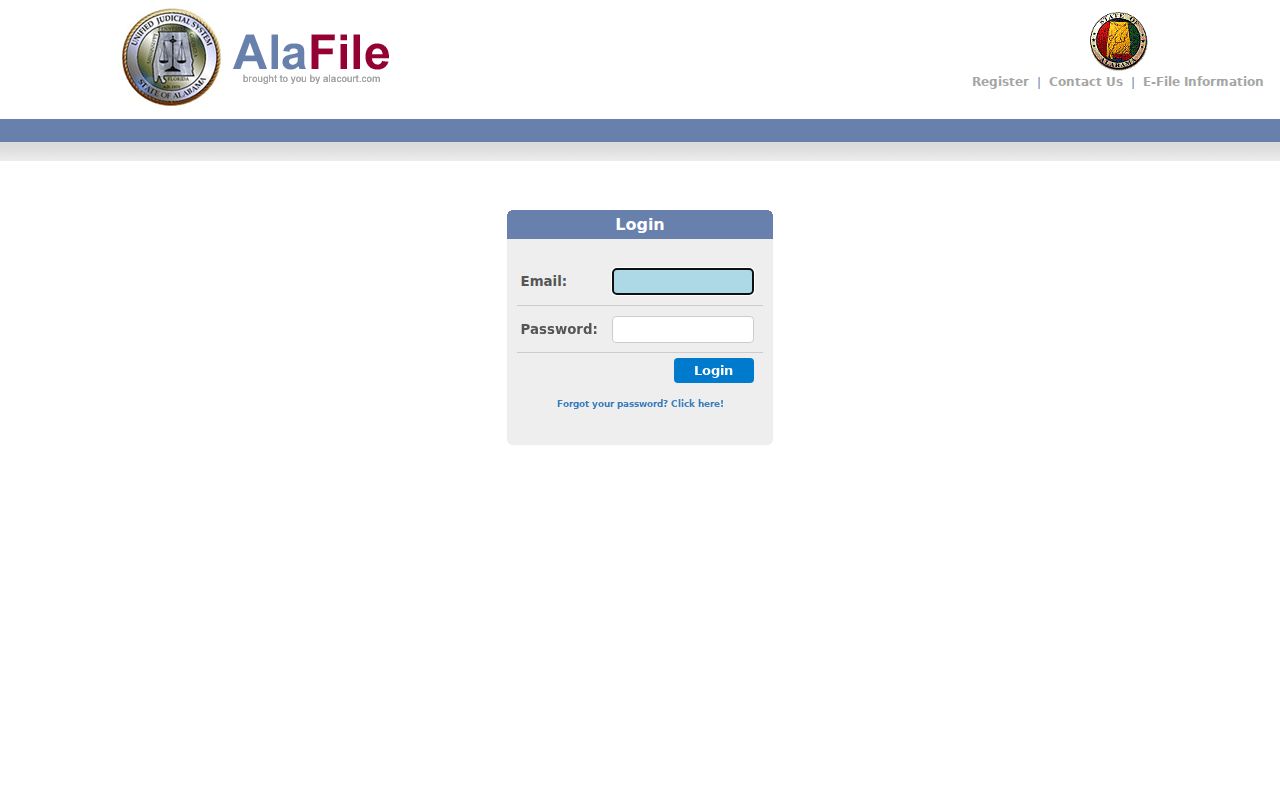
That distinction keeps filing access, record research, and clerk certification in their proper channels. A self-represented Dallas filer must register first. The filer prints the form and appears with state photo identification for clerk activation during public hours. The step proves identity for notice access. It does not open every Dallas County court record to that account.
Public Access and Sealed Records
Alabama's public-writing statute sets the baseline for Dallas County court records, with court rules adding detail where they go further. Anyone can inspect an open file and buy copies. Sealed files are different. Juvenile, adoption, confidential, and protected material stays off limits or gets limited release, no matter how curious the requester is.
Key Alabama access rules:
Alabama Code section 36-12-40 grants inspection and copying of public writings except where law provides otherwise.
Rule 30 preserves free inspection of open court files and governs copies, certification, searches, and clerk control.
Alabama's court-record privacy rules, effective in 2025, define protected information and remote-access limits.
Alabama Code section 12-15-133 keeps juvenile records confidential. A sealed exhibit is not a routine copy request. It takes more than that at the Dallas County courthouse. A party, or an attorney with proper authority, should come prepared to prove both identity and standing to see the file. Anyone else should simply ask the clerk what access the law allows, and nothing more.
Older Dallas Court Record Requests
Older Dallas County court records can sit in paper files, archives, or microfilm. There is no published cutoff for digitization. There is no stated first year of e-filing. There is no posted archive search fee. And there is no promise that every old document has been imaged for online viewing. When you contact the clerk, give the case style. Add the approximate year, the court, and the type of document you want. Then ask where the file is held. Ask whether a search fee or retrieval delay applies.
The courthouse itself has a rough history worth knowing. The earlier building's clock tower collapsed into its main courtroom in 1957. The current courthouse opened in 1960. Nothing official says records were destroyed. Do not assume a loss. If custody of old files has moved, the Alabama Department of Archives and History is a sensible next stop. Try it after the clerk checks its own holdings.
Note: Get a cost and time estimate before mailing payment for an older Dallas County court record.