
The Dallas County Court Calendar
In Dallas County, the assigned judge controls the calendar while the Circuit Clerk records notices and orders for Circuit and District cases. Alabama Rule of Judicial Administration 16 puts calendar control with the presiding Circuit and District judges. Trial settings and notice follow Civil Rule 40. The split matters. The clerk can tell you what the file shows, but only the court can set or move a hearing.
The county offers no public standalone daily-calendar database. A court date may instead surface through a mailed notice, an AlaFile electronic notice, paid AlaCourt or Just One Look case details, a courthouse posting, or a direct answer from the assigned office. The Dallas County court calendar also spans several offices. Circuit and District settings pass through the Circuit Clerk. Probate settings belong to Probate Court. Municipal settings stay with the city court that issued the citation or case.
No Free Dallas Court Calendar
There is no county-built free daily docket tool for Dallas County. Just One Look sells case-by-case trial-court details, and subscription AlaCourt offers a broader read-only service. Neither is a free local calendar. A person who cannot pay still has a sound route. Read the newest court notice. Call the right division. Inspect the clerk-controlled file when needed.
Skip the temptation to guess from a city events page too. Selma publishes an events calendar with keyword, list, month, and day controls. It lists no events. It is not a case docket. A posted event calendar cannot replace a case-specific order or the assigned court's confirmation.
Note: A calendar page with no listed event does not prove that Dallas County court has no hearings that day.
How to Find Your Court Date
Use every Dallas County court calendar channel that fits the case. Start with the document already served. It states the court level and often gives the best direct number. Then compare it with the newest electronic or docket entry. Do not stop at an older setting line. A later continuance, reset, cancellation, or disposition controls instead.
- Read the citation, summons, notice, or order. Write down the case number, court, division, hearing type, date, time, and reporting place.
- Check paid Just One Look or subscription AlaCourt if access is suitable. Open the most recent setting and read all later events.
- Call the correct office. Use the Circuit Clerk at 334-874-2523, Circuit judge offices at 334-874-2510 or 334-874-2507, District judge at 334-874-2529, Small Claims at 334-874-2524, or Juvenile Records at 334-874-2528.
- Ask whether the date is current, what kind of setting it is, and exactly where to report. A party may also confirm through counsel when represented.
- If online or phone access is not enough, inspect the file or posted docket at the Dallas County Courthouse counter during public hours. Reconfirm after any closure or continuance.
Need the right file first? The more detailed Dallas County case search process can locate it before the calendar check begins.
Call the Dallas Calendar Division
One general phone call may not reach the right staff. The staff who know a Dallas County court calendar entry sit in a specific division. A felony or major civil setting may sit with a Circuit judge. Misdemeanor, state or county traffic, small-claims, and district-civil settings fall within District Court work. Juvenile and child-support matters run through their own channels. Municipal citations stay with the issuing city unless an appeal creates a new Circuit case.
The Dallas County office directory helps. Use it when a notice points to a division rather than the main desk. Child Support uses 334-874-2543. A records line sits at 334-874-2537. Probate matters use 334-876-4830. Staff can confirm procedural facts and what the file says. They cannot advise a party on what request to make in court.
The official Dallas District judge page shows the local office used for District Court work.
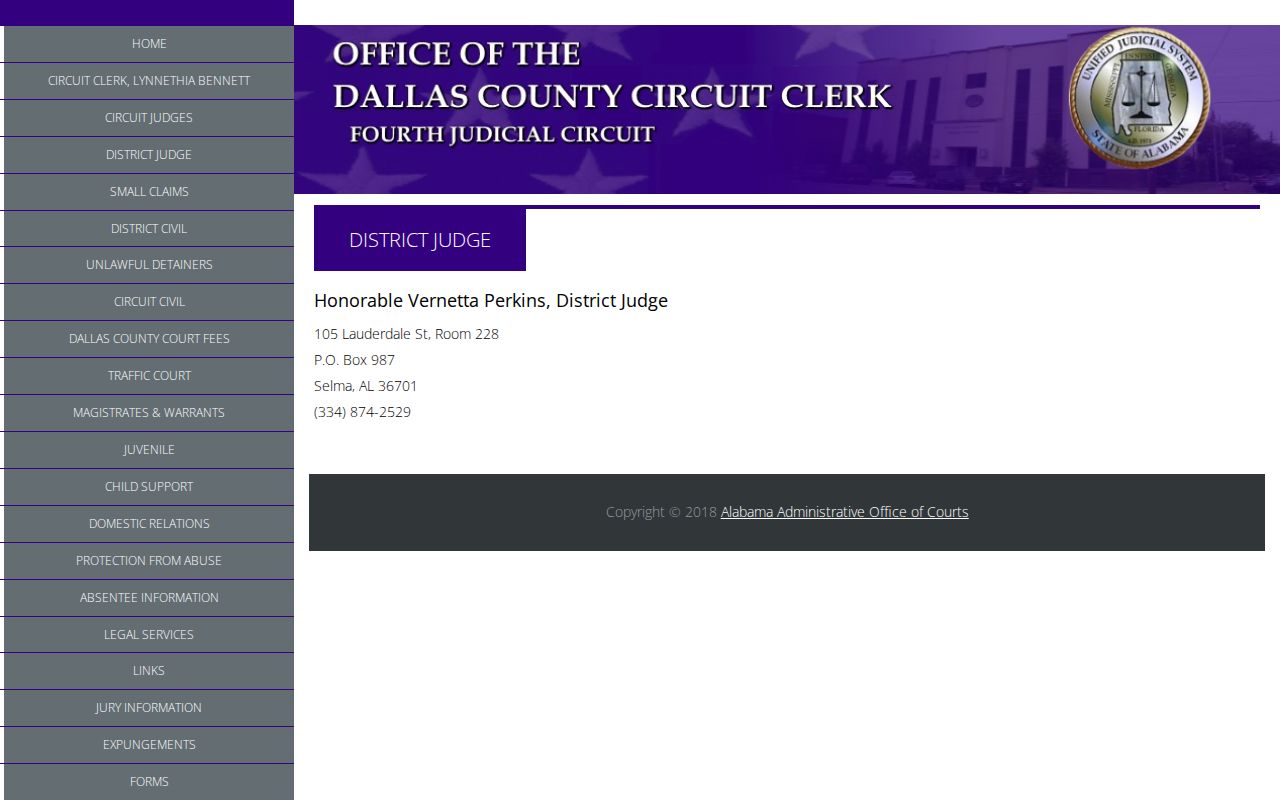
That office distinction keeps a District setting from going to a Circuit calendar contact.
Reading a Court Setting
A Dallas County court calendar entry helps only when its fields are read together. A date without the setting type may be a docket call rather than a trial. A room without the court level may send someone to the wrong desk. No anonymous Dallas County calendar result exists. Treat the inventory here as a confirmation checklist rather than a description of any online screen. Every field earns its place. Read them as one record, not separate facts.
| Date | The scheduled day, subject to any later reset, continuance, cancellation, or order. |
|---|---|
| Time | The reporting time, which may be a group docket call rather than an individual hearing time. |
| Courtroom | The room or reporting location. Confirm it with the current notice or assigned office. |
| Judge | The judicial officer or court responsible for the setting and calendar control. |
| Setting Type | Arraignment, preliminary hearing, status conference, motion hearing, plea, trial, sentencing, or another event. |
| Status | Whether the setting remains active, has moved, was cancelled, or was replaced by a later entry. |
Always match the setting to the full case number and court. One name alone can match more than one Dallas County case.
Dallas Court Calendar Terms
Short labels can make a Dallas County court calendar look more final than it is. The plain meanings show why the event name matters. They do not predict what the judge will do.
- Docket call
- The court calls listed cases to assess status and readiness. It is not always the trial.
- Pretrial or status conference
- A setting to address readiness, discovery, motions, and settlement or plea issues.
- Motion hearing
- A hearing on a filed request. Filing the motion does not mean it was granted.
- Reset or continuance
- A move from an existing setting to another date. The later notice or order controls.
- Review hearing
- A court check on compliance with an earlier order or program term.
In small-claims cases, the trial setting comes after service and the answer period. Felonies work differently. The District preliminary stage and later Circuit settings may sit under different case numbers.
Resets, Continuances, and Cancellations
Three different things can happen to a date on the Dallas County court calendar. A reset simply gives the event a new date. A continuance pushes the proceeding back through court action, sometimes with the new date arriving later. A cancellation wipes the event off the list. None of these, by itself, ends the case.
Docket history keeps everything. A hearing shown as set last month stays in the record. A later entry may say continued. The newest notice controls. Trust the signed order or notice over any old setting line. When the next date is unclear, call the assigned office. Do the same after bad weather, an office closure, or word from a lawyer. Only the court can confirm a change.
Note: A moved hearing shifts the Dallas County court calendar, but earlier docket entries remain and the case stays alive.
Wednesday Dallas Calendar Check
One quirk trips people up. The Dallas County Circuit Clerk's public counter closes every Wednesday. That rule is only about counter access. It does not mean the whole Dallas County court calendar shuts down. A Wednesday hearing is not cancelled just because the counter is unavailable. Follow the court's current notice, and contact the assigned judge or division before the setting.
Other weekdays bring published counter hours. They run 8:00 a.m. to noon and 1:00 to 4:30 p.m. Plan around that lunch closure for any in-person file check. The official jury information stresses the designated arrival time. It also says to report to the location named in the notice. Security here covers three courtrooms. Confirm your court or division rather than guessing from the building address.
What To Do If You Miss a Setting
Call the assigned Dallas County court calendar office right away. Have the case number, court, missed date, and setting type in hand. Ask what the docket now shows. That may include a new order, warrant, bond event, or later setting. A clerk can report filed information. What a clerk cannot do is give legal advice. The clerk also cannot promise the judge will excuse the absence.
Missed a Setting? A missed criminal or traffic appearance can lead to failure-to-appear process, added costs, a warrant, or bond consequences.
Call the named court or counsel promptly and follow the court's instructions about the next required step.
Do not arrive or file a request based only on an old calendar line.
Civil settings carry their own risks. Missing one can bring serious case effects, depending on the setting and the order. Pull the current entry and the signed document first. Then get legal advice if rights or deadlines are in play.
Dallas AlaFile Calendar Notices
AlaFile is a filing and service system, not an anonymous Dallas County court calendar search. It can still help an activated self-represented party by delivering electronic orders and notices. Dallas instructions require that user to register online. The user must also print the form, and appear with state photo identification during public hours for activation. After activation, electronic notice becomes part of the setting-confirmation chain. The Dallas child-support division page shows how one local division works. You can see its own contacts and process there.
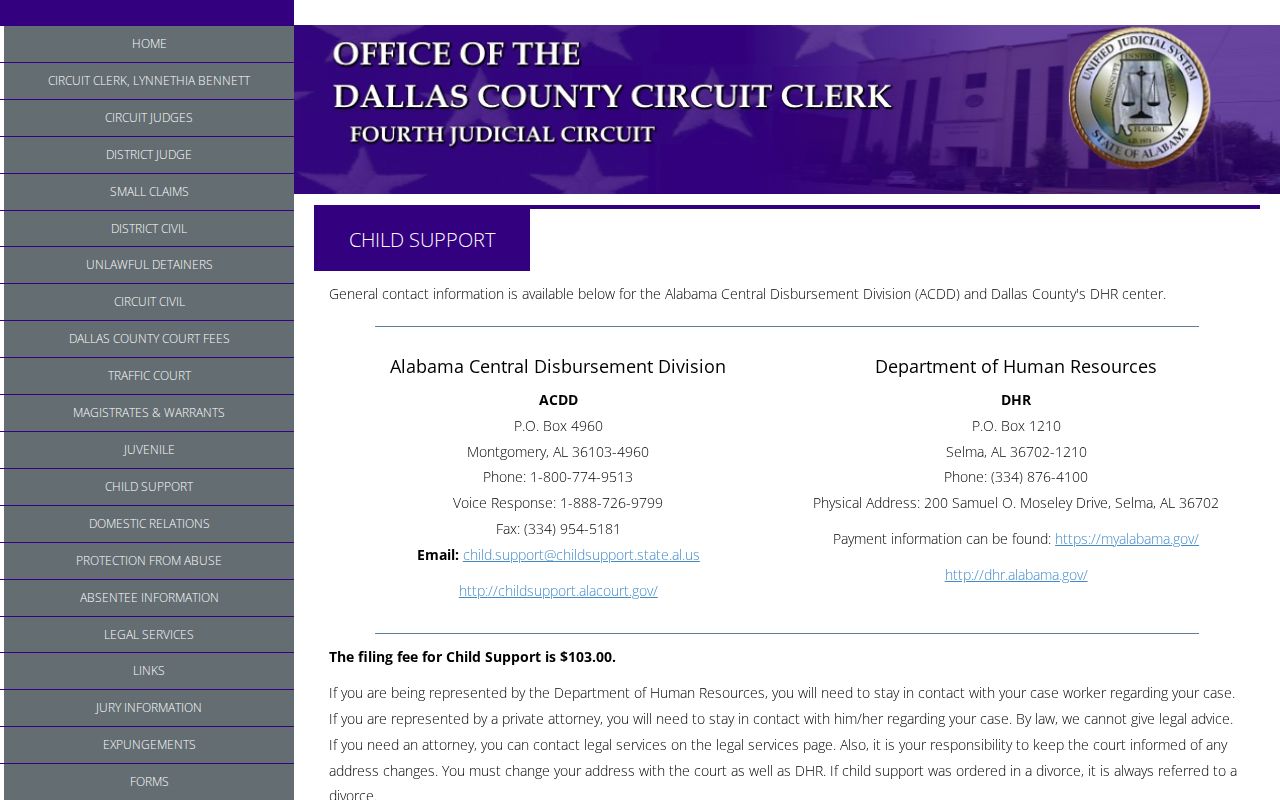
That division page proves a simple point. A current notice and the correct office beat any general calendar assumption every time.
Represented Circuit Civil parties normally get orders and notices through counsel. Dallas publishes no text reminder program, no anonymous alert service, and no first-online-calendar date. Those gaps are real. Don't wait on a reminder product the local court does not offer. Instead, check the docket or call the clerk yourself.